
Key Takeaways
- Venue restrictions have a direct impact on menu selection, food preparation, and service methods.
- Kitchen facilities, power supply, and access routes determine how food is produced and delivered.
- Guest capacity and venue layout influence staffing requirements and service efficiency.
- Compliance with venue regulations helps prevent operational issues during the event.
- Early collaboration between venue managers and event catering providers supports smoother planning.
Introduction
Selecting a venue is one of the earliest decisions in event planning, but it also shapes many aspects of event catering. Every venue presents different physical, operational, and regulatory limitations that influence how food is prepared, transported, served, and managed throughout an event. Whether the venue is a hotel ballroom, heritage building, convention centre, outdoor park, or private residence, caterers must adapt their operations to suit the environment. Understanding these limitations early allows organisers and catering teams to make practical decisions that reduce logistical challenges, maintain food quality, and improve service efficiency on the event day.
Kitchen Facilities and Food Preparation
One of the first considerations is the availability of kitchen facilities. Some venues provide fully equipped commercial kitchens, while others offer only basic preparation areas or no kitchen at all. This difference significantly affects menu planning and production methods. When a venue lacks cooking equipment, refrigeration, or sufficient preparation space, caterers often prepare food off-site and transport it to the venue for finishing or immediate service. This approach requires careful timing to preserve food quality and comply with food safety standards. Certain dishes that rely on immediate preparation or precise temperature control may need to be replaced with alternatives that travel and hold their quality more effectively. Assessing kitchen facilities before confirming the menu helps ensure that operational requirements match the venue’s capabilities.
Access, Loading Areas, and Equipment Movement
Venue accessibility has a direct effect on catering logistics. Large-scale event catering often involves transporting food, serving equipment, tables, beverage stations, and waste disposal materials. Venues with dedicated loading bays, freight lifts, and wide service corridors simplify this process. In contrast, venues located on upper floors, historic buildings with limited lift access, or outdoor locations may require additional labour and more time for setup. Long walking distances between unloading points and dining areas also increase operational complexity. Caterers must plan delivery schedules carefully, coordinate equipment movement, and allocate sufficient staff to avoid delays that could affect food service during the event.
Venue Layout and Guest Service Flow
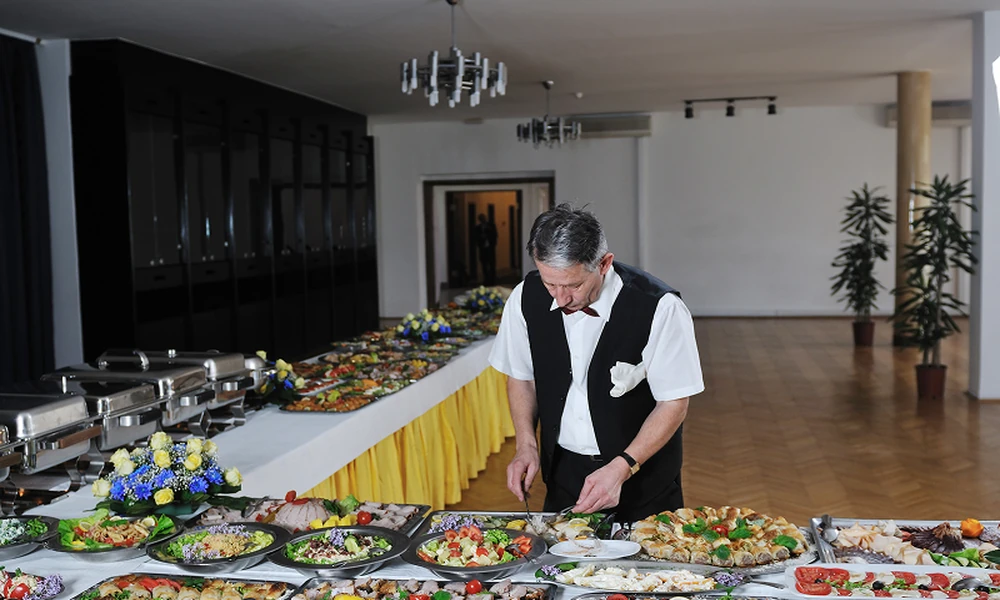
The physical layout of a venue influences how guests receive food and how catering staff operate throughout the event. Wide open spaces provide flexibility for buffet stations, food counters, and beverage areas, while smaller venues require more compact service arrangements. Narrow walkways, fixed furniture, structural pillars, or multiple rooms may create bottlenecks that slow guest movement and reduce service efficiency. Catering teams often adjust buffet placement, serving station numbers, and staff allocation based on the venue’s floor plan. Seating arrangements must also support comfortable guest circulation while allowing catering staff to replenish food, clear tables, and maintain hygiene without disrupting the event.
Venue Regulations and Operational Restrictions
Every venue has operational policies that affect catering activities. These regulations may include restrictions on open flames, alcohol service, cooking methods, waste disposal, delivery schedules, noise levels, or approved supplier lists. Some venues prohibit live cooking stations because of ventilation or fire safety requirements, while others limit setup and teardown times due to multiple bookings on the same day. Outdoor venues may require additional permits or contingency planning for weather conditions. Understanding these rules during the planning stage prevents last-minute adjustments and ensures that catering operations comply with venue management requirements while maintaining efficient service throughout the event.
Utilities, Power Supply, and Environmental Conditions
Reliable utilities are essential for successful catering operations. Power outlets support warming equipment, refrigeration units, coffee machines, lighting, and other catering appliances. Limited electrical capacity may require caterers to reduce equipment usage or arrange temporary power solutions where permitted. Water availability also affects food preparation, cleaning, and sanitation. Environmental conditions play an equally important role, particularly at outdoor venues where heat, humidity, wind, or rain can influence food preservation and guest comfort. Catering teams often modify menus, serving equipment, and food display methods to accommodate changing environmental conditions while maintaining food safety standards.
Conclusion
Venue limitations are not obstacles but planning factors that influence every stage of catering operations. Kitchen facilities, accessibility, venue layout, operational regulations, and available utilities all contribute to decisions involving menu design, staffing, logistics, and service methods. Identifying these limitations early allows event catering providers and event organisers to develop practical solutions that fit the venue’s conditions. Careful planning ensures that catering services remain efficient, food quality is maintained, and guests experience a well-organised event regardless of the venue’s constraints.
Visit Alice Boulangerie and let us build a catering plan that fits your venue.